
WAEC Chemistry Practical free Questions and Answers now released online for Alternative A and B. If you wish to score A1 in Chemistry, this post got you covered. The latest Chemistry Practical specimens Answers for WAEC this year has been taken care of here.
It’s obvious many might be searching for 2026 free West African Examination Council (WAEC) Chemistry Practical expo or runs. Explore all the necessary updates on the Chemistry Practical exams and PDF download below. The Exams schedule from the WAEC Timetable will soon be updated here.
In addition, there is sampled WAEC Chemistry Practical Past Questions and Answers for practice before the main exams. Do well to make good use of the likely WAEC expo/runz Alternative to Chemistry Practical A and B updates provided hereunder.
Practical Chemistry Answers to Questions
The Practical is divided into two parts:
- Quantitative Analysis also known as titration
- Qualitative Analysis also known as salt analysis
What is quantitative analysis in chemistry Practical lab?
quantitative chemical analysis, branch of chemistry that deals with the determination of the amount or percentage of one or more constituents of a sample.
format for quantitative analysis is shown below:
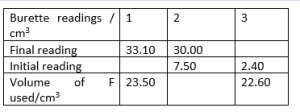
What is qualitative analysis in chemistry practical?
Qualitative analysis is a branch of chemistry which deals with identification of elements or grouping of elements present in the sample. The identification of elements is done by undergoing certain test. By observing the response to the test we can identify the elements
Format for qualitative analysis is shown below
| Test | Observation | Inference |
Practical Apparatus
- Bunsen Burner – a gas burner used for heating substances in the laboratory.
- Beaker – a cylindrical container with a flat bottom and a lip used for mixing, stirring, and heating liquids
- Test Tube – a narrow, cylindrical tube used for mixing and heating small quantities of liquids
- Pipette – a thin, graduated tube used to measure and transfer small volumes of liquid.
- Graduated Cylinder – a tall, cylindrical container used to measure the volume of liquids.
- Balance – an instrument used to measure mass.
- Funnel – a conical-shaped tool used to channel liquid or powder into a container with a small opening.
- Mortar and Pestle – a tool used for grinding and mixing substances, typically solids.
Others
- Toungs
- Crucible
- Spatula
Past Questions
ALTERNATIVE TO PRACTICAL A
Q1.
A is a solution of KMnO4 containing 0.020 moldm−3. B is a solution of Fe2+ obtained by dissolving 3.8 g of iron granules in 250 cm3 of solution.
(a)Put A in the burette. Pipette 20.0 cm3 or 25 cm3 of B into a conical flask and add 10 cm3 of H2SO4. Titrate it with A.
Repeat the titration to obtain concordant titre values. Tabulate your result and calculate the average volume of A used.
MnO4−(aq) + 5Fe2+(aq) + 8H+(aq) → Mn2+(aq) + Fe3+(aq) + 4H2O(l)
[ KMnO4 = 158.0, Fe = 56.0 ]
(b) From your results and information provided, calculate the:
(i) concentration of B in moldm−3
(ii)concentration of B in gdm−3
(iii) mass of Fe2+ in 250 cm3 of B.
(iv) percentage of Fe2+ in the granules.
Answers:
(a) Volume of pipette used (Volume of B used) = 25.0 cm3
| Burette Readings (cm3) | Rough | 1st titre | 2nd titre |
| Final burette readings | 18.20 | 18.50 | 38.40 |
| Initial burette readings | 0.00 | 0.40 | 20.20 |
| Volume of A used (KMnO4) | 18.20 | 18.10 | 18.20 |
Volume of A used = Rough+1sttitre+2ndtitre3
= 18.20+18.10+18.203
= 18.166
VA = 18.17 cm3
(i) Concentration of B in moldm−3
From the balanced equation : MnO4−(aq) + 5Fe2+(aq) + 8H+(aq) → Mn2+(aq) + Fe3+(aq) + 4H2O(l)
CA = 0.020 moldm−3 NA = 1
VA = 18.17cm3 NB = 5
CB = ?
VB = 25.0cm3
Using CAVACBVB = NANB
CB = CAVANBNAVB
CB = 0.02X18.17X525X1
CB = 0.07268
CB = 0.070 moldm−3
(ii) Concentration of B in gdm−3
If 3.8 g of Fe granules was dissolved in 250 cm3 of B
Xg of Fe granules will be dissolved in 1000 cm3 of B
X = 3.8X1000250 = 15.2 gdm−3
Concentration of B in gdm−3 will be 15.2 gdm−3
(iii) Mass of Fe2+ in 250cm3 of B.
To get the mass, we’ll use the formula n = mass/Molarmass
However, since do not know the number of moles, n , hence we’ll need to obtain n, using n = CV1000 since we have C and V
So, n = 0.070×2501000 = 0.025 mole
Now, we can apply n = massMolarmass to obtain the mass, given that the Molar mass of Fe was given to be 56
n = mass/Molarmass
m = n x M = 0.018 x 56 = 1.02 g
Therefore, 1.02 g of Fe2+ in 250 cm3 of B.
(iv) Percentage of Fe2+ in the granules = MassofFe2+TotalmassofFegranules×100
= 1.023.8×100
= 26.89%
= 26.9%
Q2.(a) Mention two gases that are soluble in water.
(b) Name two apparatus that could be used to measure 9.50 cm3 of a solution accurately.
(c) What is the use of a fume cupboard in the laboratory?
(d) Name three personal protective equipment that are used in the laboratory.
Answers:
(a) Gases that are soluble in water are:
– Ammonia
– Hydrogen chloride
– oxygen,
– carbon dioxide,
– Sulphur dioxide,
– chlorine, and
– hydrogen sulfide.
(b) Apparatus that could be used to measure volume of solutions accurately:
– volumetric flask,
– graduated cylinder,
– burette, or
– volumetric pipette.
(c) In a laboratory, fume cupboards are essential safety equipment used to capture and remove airborne hazardous or poisonous substances like gases, vapours, aerosols, and dust, protecting users from exposure to harmful chemicals.
(d) Personal protective equipment (PPE) used in the laboratory.
– Lab coats
– safety glasses
– respiratory protector
– Hand gloves
– Face shield
Q3.C is a mixture of two simple inorganic salts, one of which is a sodium salt.
Perform the following exercises on C. Record your observation and identify any gas(es) evolved. State the conclusions you draw from the results of each test.
(a) Put all of C into a test tube and add about 10 cm3 of distilled water and shake.
b(i) Put about 2 cm3 of the filtrate into a boiling tube and heat strongly.
(ii) Put half of the residue into a test tube and add dil. HCl.
(iii) To about 2 cm3 of the clear solution from b(ii), add aqueous NaOH in drops, then in excess.
(iv) To another 2 cm3 of the clear solution from b(ii), add aqueous ammonia in drops, then in excess.
Answer:
| Test | Observation | Inference | |
| (a) | C + 10cm3 of H2O | C partially dissolves | C is a mixture of a soluble and insoluble salt. |
| b(i) | 2cm3 of filtrate + heat | Colourless and odourless gas in form of bubbles | CO32− suspected |
| (ii) | residue + t.t + dil. HCl | No visible reaction | NO3−, SO42− suspected |
| (iii) | Solution from b(ii) + NaOH in drops and then in excess | White ppt which is dissolves in excess NaOH | Zn2+ , Pb2+ , Al3+ suspected |
| (iv) | Solution from b(ii) + NH3 in drops and then in excess | White ppt insoluble in excess NH3 | Pb2+ confirmed. |
ALTERNATIVE PRACTICAL B
Q4. D contains 6.30 g of HNO3 in 500 cm3 of solution. E was prepared by dissolving 8.20 g of washing soda crystals ( Na2CO3.xH2O) in 250 cm3 of distilled water.
(a) Put D into the burette and titrate it against 20.0 or 25.0 cm3 portion of E using methyl orange as indicator.
Repeat the exercise to obtain concordance titre values.
Tabulate your results and calculate the average volume of the acid used.
(b) Write a balanced chemical equation for the reaction.
(c) From your results and the information given;
(i) calculate the concentration of E in moldm−3;
(ii) what is the value of x in Na2CO3.xH2O? [H= 1.0; C =12.0; O = 16.0; Na = 23.0; N = 14.0 ]
Answers:
(a) Volume of pipette used = 25.00 cm3
| Burette readings (cm3) | Rough | 1st titre | 2nd titre |
| Final burette reading | 20.90 | 40.90 | 21.00 |
| Initial burette reading | 0.00 | 20.10 | 0.00 |
| Volume of acid, A used | 20.90 | 20.80 | 21.00 |
Volume of A used = Rough+1sttitre+2ndtitre3
= 20.90+20.80+21.003
= 20.90 cm3
(b) 2HNO3aq + Na2CO3.xH2Oaq → 2NaNO3 + CO2 + (X+1)H20(l)
c(i) concentration of E in moldm−3
Since we do not know the concentration of D in moldm−3, but in g per cm3, it will be difficult using the fomula CAVACBVB = NANB.
Thus, we must first convert the Conc. of D to moldm−3.
We were told from the question that D contains 6.30 g of HNO3 in 500 cm3,
So, if D 6.30 g of HNO3 was dissolved in 500 cm3
then, X g of HNO3 will be dissolved in 1000 cm3
X = 6.30×1000500 = 12.6 gdm−3
Recall that Molar concentration (moldm−3) = Massconcentration(gdm−3)Molarmass
Molar mass od HNO3 = 1 + 14 + (16 X 3) = 63 g/mol
concentration of D(moldm−3) = Massconcentration(gdm−3)Molarmass
CD = 12.663 = 0.20 moldm−3
Now we can use the formula CDVDCEVE = NDNE.
Given that
CD = 0.20 moldm−3 ND = 2
VD = 20.90cm3 NE = 1
CE = ?
VE = 25.0cm3
CB = CDVDNENDVE
CB = 0.2X20.90X125X2
= 0.0836 moldm−3
= 0.084 moldm−3
(ii) To get the value of x in Na2CO3.xH2O
First, from the question, if 8.20 g of Na2CO3.xH2O was dissolved in 250 cm3 of distilled water.
then, Xg of Na2CO3.xH2O will be dissolved in 1000 cm3 of distilled water.
So, X = 8.20×1000250 = 32.8 gdm−3
Mass concentration of E = 32.8 gdm−3
Recall that concentration of E(moldm−3) = Massconcentration(gdm−3)/Molarmass
Then, Molar mass of E ( Na2CO3.xH2O ) = Massconcentration/Molarconcentration
= 32.80.0836
= 392.34 g/mol
But Molar mass of Na2CO3.xH2O = Na2CO3 + x(H2O)
392.34 = (23 x 2) + 12 + (16 x 3) + 18x
392.34 = 46 + 12 + 48 + 18x
392.34 = 106 + 18x
18x = 392.34 – 106
18x = 286.34
x = 286.3418
x = 15.9
x ≈ 16
Q5.(a) An aqueous solution of a salt was added to excess sodium sodium trioxocarbonate (IV) solution in a test tube. There was effervescence, the test tube became warm and a white precipitate was observed. State three inferences that could be drawn from these observations.
(b) Consider the following salts; NH4Cl; PbSO4; NaHCO3 and Cu(NO3)2.
Select from the list, the salt(s) which:
(i) would not readily dissolve in water;
(ii)produce(s) effervescence with dilute mineral acids;
(iii) decompose(s) on heating;
(iv) dissolve(s) in water to form an alkaline solution;
(v) sublime(s) on heating
(c) A solution of an acid was titrated with sodium hydroxide solution using methylorange as the indicator. State three precautions that are necessary when carrying out such an
Answers:
a(i) Salt solution is acidic
– Reaction is exothermic.
– White precipitate is likely to be a trioxocarbonate(IV) salt of Al, Ca and Zn.
– Prepared solution contained soluble salt of Al, Ca and Zn.
b(i)PbSO4
(ii) NaHCO3
(iii) NaHCO3 ; Cu(NO3)2.
(iv) NaHCO3
(v) NH4Cl
(c) Precautions to be taken during titration include:
– Wear a lab coat to protect your clothing from spills.
– Ensure to rinse the burette with an acid solution
– Also ensure the funnel is removed immediately after filling the acid into the burette.
– Avoid error due to parallax while taking the reading to determine the end point.
– Ensure all glassware is clean and free of bubbles.
SEE: WAEC Timetable
How to Answer Chemistry Practical WAEC Questions
The following steps are very important for candidates that wish to make good grades:
1. Read all the Instructions provided in the Question paper: This is a very important thing to do as soon as the Question paper is given to you. The essence of this is to help you know what you are required to do. Try as much as possible to adhere to the exams instructions.
2. Fill in Your details where required on the Answer booklets. One of the greatest mistakes candidates make is failure to write their details on the Answers booklet. Filling Your exams details before attempting questions is important because you may forget or may cut off with time.
3. Start with the Questions you know best: This is a smart approach. When you start answering the questions you know very well, you will not only have the confidence to answer the difficult ones but give the marker/examiner a good impression about your knowledge of the subject.
4. Read the Questions at least Thrice before providing solutions: Don not be in a haste to answer questions. Try and read them over and over again to gain full understanding of the questions.
5. Make your handwriting are readable: Take your time to write very well, a good handwriting will make your answers clear understandable.
6. Cross Check your work before submission: I’m all your doing, don’t fail go through your work before submitting your answer booklet. This will enable you to correct mistakes made.
How to pass WAEC exams
It’s important to make your West African Senior Secondary School Certificate Examination a huge success. The following ways are beneficial to candidates that wish to pass WAEC with flying colors:
1. Make adequate Preparation: By preparing very well for the WAEC Chemistry Practical exams, candidates will be able to write the exams confidently.
2. Attending Extra moral Classes: The school teachers might not be able to complete the curriculum on time. On that note, it is advisable for students to attend tutorials that will enlightened the more on the right topics under The syllables.
3. Make good use of Past Questions: The West African Examination Council, WAEC has a pattern of setting questions. Students that make good use of the WAEC Chemistry Practical past Questions and Answers will surely perform well in the exams. Try and practice the questions set on previous years.
4. Use WAEC Chemistry Practical Syllabus: The WAEC Chemistry Practical Syllabus has a list of topics to be treated for years. Candidates should ensures that they use the syllabus while studying and preparing for their exams.
WAEC Expo/Runs
It’s important to let you know that infoshoutloud.com.ng team do not supply WAEC Expo or Runs. Beware of platforms promising you Expo on WAEC Chemistry Practical.
All we do is to ensure that we provide you with all the necessary steps and updates on how to pass your exams without Stress. Stay tuned for more Related Updates.
If your still have something to ask about the WAEC Questions and Answers for Chemistry Practical, use the comments section below.
Similar Post
- WAEC Economics Questions and Answers
- WAEC Chemistry Questions and Answers
- WAEC English Language Questions and Answers
- WAEC Marketing Questions and Answers
- WAEC Civic Education Questions and Answers
- WAEC Literature in English Questions and Answers
- WAEC Geography Questions and Answers
- WAEC Government Questions and Answers
- WAEC Agric Science Questions and Answers
- WAEC Mathematics Questions and Answers
- WAEC Computer Studies Questions and Answers
